
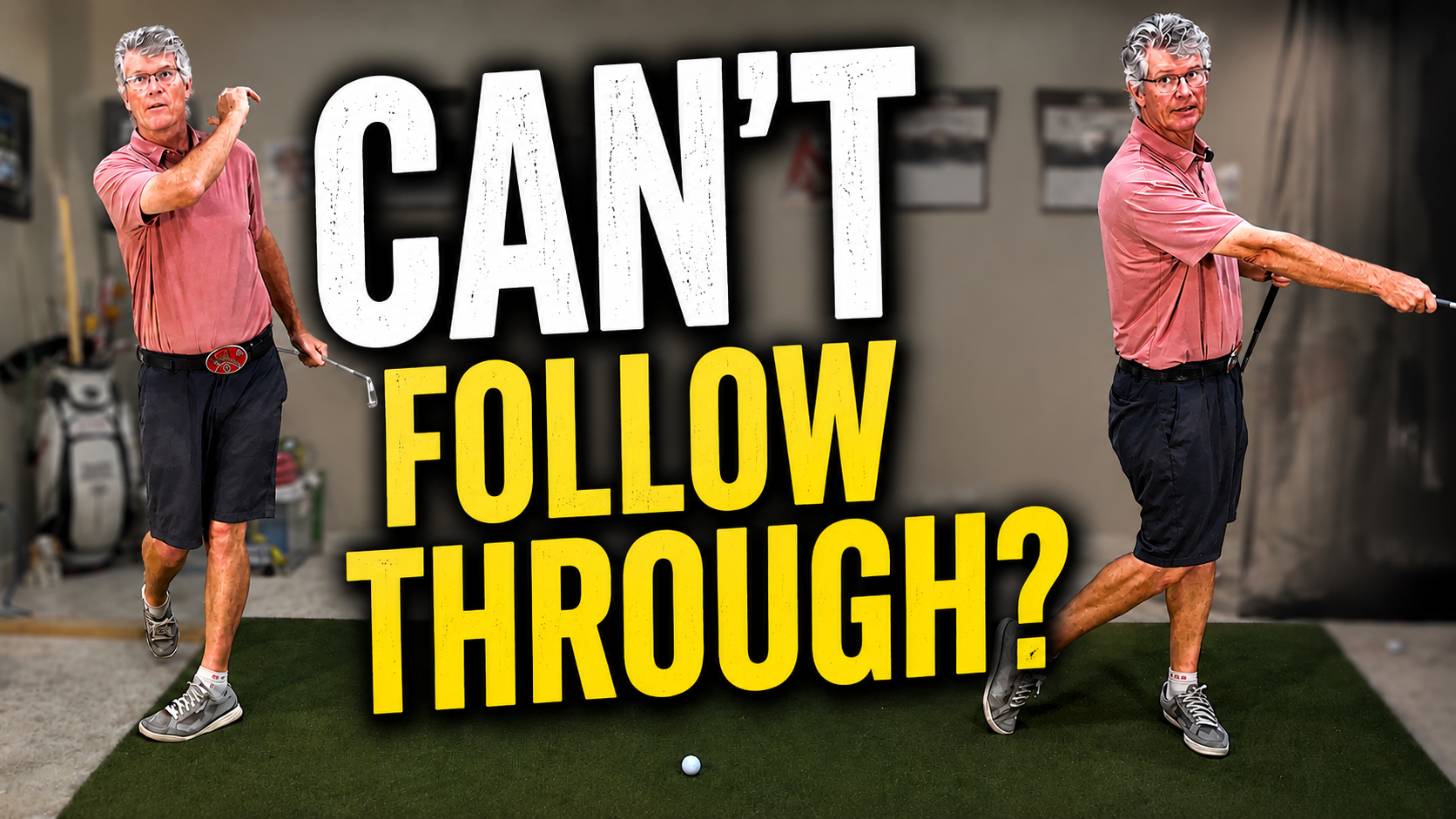
Many golfers over 50 tell us the same thing: “I just can’t follow through.” They feel stuck at impact or finish on the back foot. The result may be a slice, a topped shot, a heavy iron or a weak ball flight.
If this sounds familiar, the problem may not be a lack of flexibility or an inability to turn. You may simply be missing one important feeling: traction.
This simple idea has connected with golfers everywhere. Our YouTube lesson, Struggling To Follow Through? Try This Easy Fix For Golfers Over 50!, has now been viewed more than 60,000 times. It shows how finding traction can help the swing move through the ball more naturally—without adding another complicated swing thought.
Why Do So Many Golfers Feel Stuck in Their Follow-Through?
The follow-through is not something you should have to manufacture. It is the result of what happened earlier in the swing.
Without a stable connection with the ground, it becomes difficult to move through the shot freely. Your body may stay behind the ball, while the clubhead cuts across it or strikes the ground in the wrong place.
Common signs include:
- Finishing with too much pressure on your back foot
- Slicing or pulling the driver
- Topping shots or hitting behind the ball
- Losing distance even when you swing harder
- Feeling as though your body stops at impact
- Falling backward or stepping out of the finish
Many golfers respond by trying to turn their hips faster or force a bigger finish. For golfers over 50, that can make the swing feel even more difficult. The answer is often not more effort or more rotation. It is creating a better connection with the ground so your swing has the support it needs.
What Is Traction in the Golf Swing?
Traction is the feeling that your lead foot has a secure connection with the ground as you swing through the ball. For a right-handed golfer, that is the left foot. For a left-handed golfer, it is the right foot.
Think about walking on a slippery surface compared with wearing shoes that grip the ground. With traction, you can move confidently. In the golf swing, a secure lead foot creates a stable base that allows the clubhead to continue toward the target.
Traction does not mean aggressively driving or spinning your lead foot. It is a simple feeling of support that lets your body respond to the club.
A Simple Setup Change for Better Iron Contact
With an iron, try approximately 60% to 70% of your pressure on the lead side. This is a starting feel, not a rigid measurement.
From there:
- Set up in a comfortable, athletic posture.
- Feel your lead foot connected securely to the ground.
- Let the club swing back without shifting excessively away from the target.
- Swing the clubhead through the ball and toward your target.
- Allow your body to respond and finish in balance.
This support can help move the low point forward, making it easier to contact the ball before the turf. Instead of trying to “hit down,” focus on swinging through with traction.
Two Easy Ways to Practise the Feeling
1. Lead-Foot Traction Rehearsal
Without a ball, make several slow, waist-high practice swings. As the club swings forward, feel your lead foot holding the ground. Let your arms swing and your body turn naturally into a balanced finish.
Then hit a few short shots at half speed. Forget distance and pay attention to contact, balance and the club moving through the ball.
2. Balanced-Finish Check
Hit an iron or driver at a comfortable speed and hold your finish for three seconds.
Ask yourself:
- Can I feel pressure in my lead foot?
- Is my trail heel able to release naturally?
- Am I balanced, or am I falling backward?
- Did the clubhead swing toward the target?
Your driver setup may feel more centred than your iron setup, but you still need lead-foot traction through the strike. Build speed only when you can finish in balance.
What Not to Do
Avoid turning this cue into another forced body movement. You do not need to:
- Spin your hips as fast as possible
- Lunge toward the target
- Force your body into a finish position
Give the clubhead enough support to swing freely. The balanced follow-through should emerge from the motion.
How Will You Know It Is Working?
You may notice:
- More solid iron contact
- Fewer topped or heavy shots
- A more predictable starting direction
- Better balance through the finish
- Straighter, stronger drives
- Less effort and more confidence
Do not judge the change by one ball. Use several slow rehearsals and short shots to learn the feeling before adding speed.
Click the title below to watch the YouTube video:
Struggling to Follow Through? Try This Easy Fix for Golfers Over 50!
Golf Lessons in Winnipeg and Online Golf Instruction
If you still feel stuck, a coach can identify whether the issue is your setup, pressure, club movement or mobility.
At Over50Golf, we specialize in helping golfers over 50 move better, swing freer and play longer. Barry Gibson is a PGA of Canada Golf Professional with more than 40 years of experience helping golfers simplify their swings and improve their results.
Our private golf lessons in Winnipeg are built around your swing, body and goals. We also offer online golf instruction for golfers outside Winnipeg who want expert feedback and a personalized path forward.
You do not need a picture-perfect swing or a long list of technical positions. You need to understand the one or two changes that can make the greatest difference to your game.
Ready to Stop Fighting Your Follow-Through?
Book a call with Over50Golf and let’s talk about what is holding your game back. Whether you are looking for Winnipeg golf lessons or online golf instruction, we will help you find a simpler way to make better contact, swing with more confidence and enjoy the game again.
Book a Call With Over50Golf
Move Better. Swing Freer. Play Longer.
Golf Without The Struggle.


